How to Protect Your Skin After Melasma Treatment
Looking after your skin to help maintain clearer, more even-looking results
Treating melasma is often a journey rather than a one-off fix. Whether you’ve invested in medical-grade skincare, professional skin treatments or advanced procedures, seeing your pigmentation begin to fade can feel incredibly rewarding. However, many people are disappointed when those darker patches gradually return.
The reason isn’t necessarily that your treatment hasn’t worked. Melasma is a long-term skin condition, and without the right daily protection, the skin can continue receiving signals to produce excess pigment.
At No.29 Medical Aesthetics in Beacon Hill, we believe successful melasma management is about combining professional treatment with the right home skincare routine. One of the most important steps you can take every day is protecting your skin with an appropriate sunscreen. If you’re unsure where to begin, our Advanced Facial and Skin Treatments can help identify the most suitable approach for your skin.
What is melasma?
Melasma is a common form of hyperpigmentation that causes brown or grey patches to develop on the skin. It most often appears on areas regularly exposed to the sun, including the:
• Cheeks
• Forehead
• Upper lip
• Chin
It affects women much more frequently than men and is often linked with hormonal changes, pregnancy, genetics and sun exposure.
Unlike age spots or freckles, melasma behaves differently. Even after successful treatment, the pigment-producing cells within the skin remain active, meaning flare-ups can occur if the skin isn’t protected.
Why Melasma Comes Back
Many people believe sunlight is only a concern during the summer months or on holiday, but your skin is exposed to light every day.
Ultraviolet radiation is well known for stimulating pigment production, but researchers now understand that visible light also plays an important role in triggering melasma.
This means that even if you’re already using a clear SPF 50 sunscreen, your skin may still be exposed to wavelengths of light that encourage pigmentation to return.
That’s why ongoing daily protection is just as important as the treatment itself.
Read the research on visible light and melasma
Why choose a tinted sunscreen?
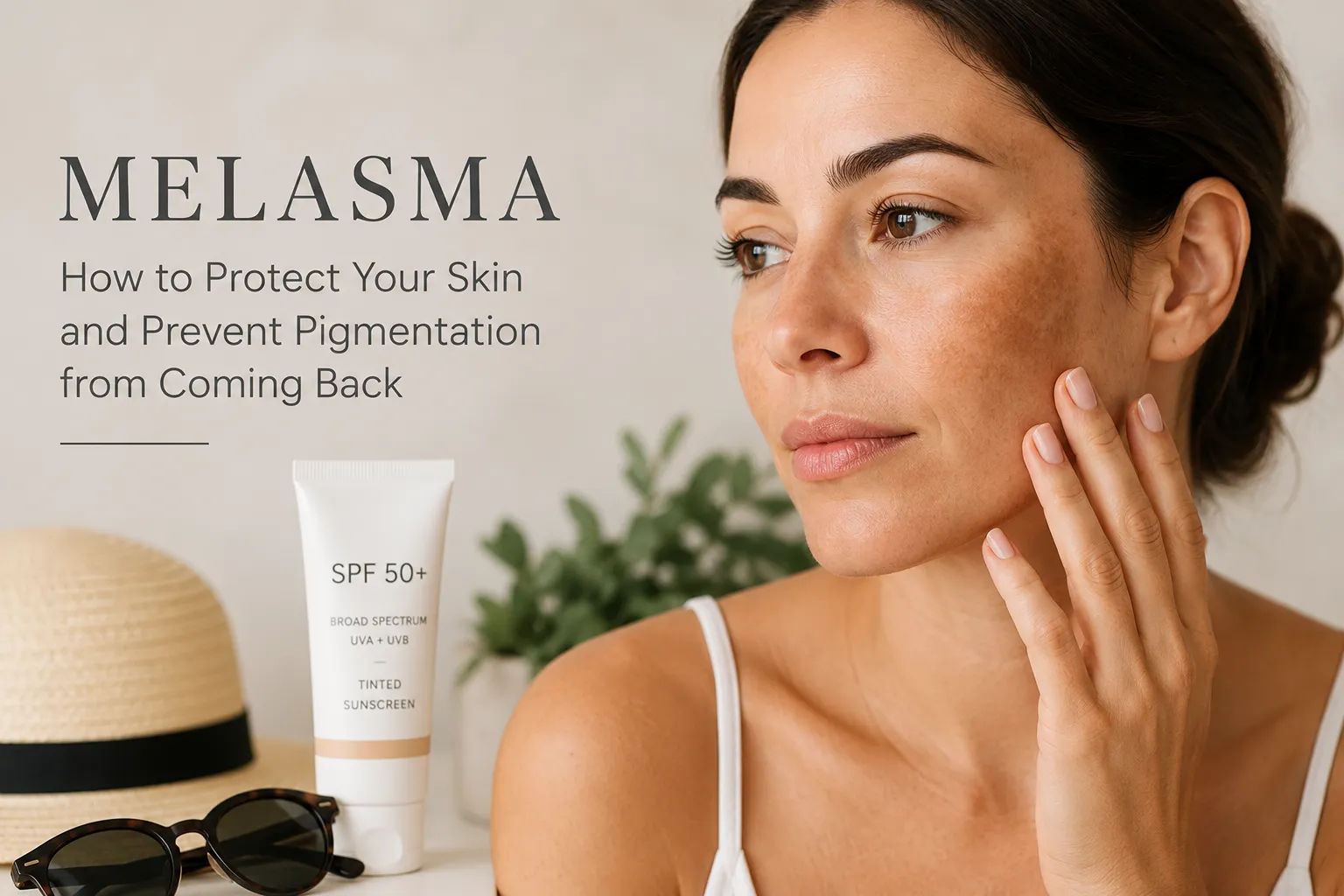
One of the biggest advances in melasma management has been recognising the importance of iron oxides within sunscreen. Choosing a tinted sunscreen for melasma can provide additional protection against visible light thanks to the iron oxides it contains.
Tinted sunscreens contain iron oxides that help protect the skin against visible light as well as ultraviolet rays.
Read the iron oxide sunscreen study
This extra level of protection isn’t usually provided by traditional untinted sunscreens.
For many people living with melasma, changing to a high-quality tinted SPF can become one of the simplest but most effective ways to help maintain treatment results.
Are you applying enough sunscreen?
Even the best sunscreen won’t provide its full protection if too little is applied.
For the face alone, around two finger lengths of SPF 50+ is generally recommended.
Sunscreen should be applied every morning as part of your skincare routine and reapplied whenever you are:
• Spending time outdoors
• Exercising or sweating
• Swimming
• Sitting for prolonged periods near windows
• Enjoying a holiday or warm weather
Daily consistency is often far more important than only applying sunscreen on particularly sunny days.
Read the latest photoprotection research
Professional treatment still plays an important role
Although sunscreen is essential, it cannot remove existing pigmentation that’s already developed.
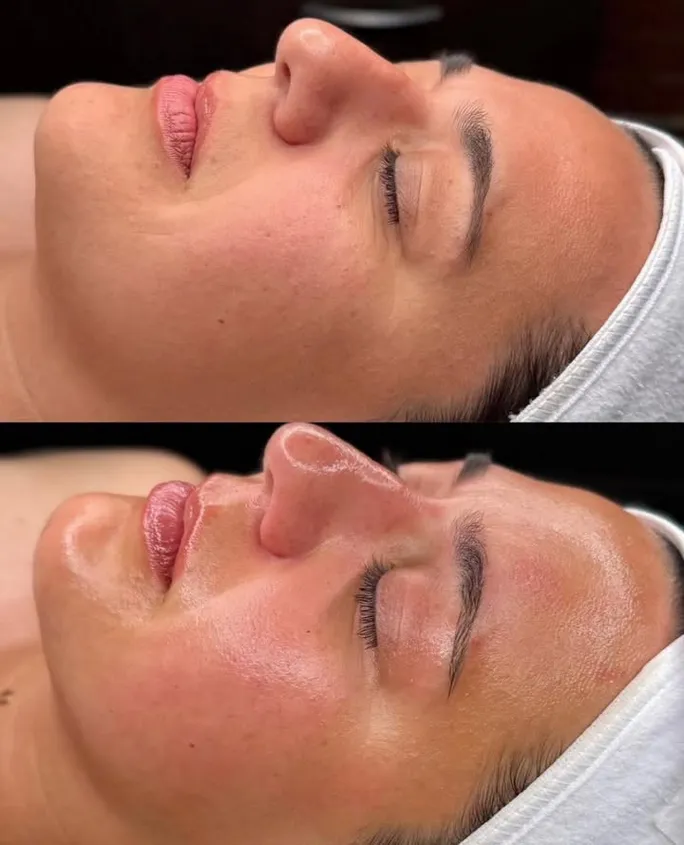
Professional treatments remain an important part of improving the appearance of melasma and helping to restore a brighter, more even complexion.
Depending on your skin type and individual concerns, your personalised treatment plan may include:
• Medical-grade skincare
• Chemical peels
• Microneedling
• IPL for suitable patients
• Pigment-reducing skincare ingredients
These treatments work to improve existing pigmentation, while good daily sun protection helps reduce the likelihood of new pigmentation developing.
Rather than thinking of these approaches separately, it’s helpful to see them as working together. Professional treatment helps address pigmentation that’s already present, while sunscreen helps protect the results you’ve achieved.
Why personalised treatment matters
No two cases of melasma are exactly the same.
Factors such as skin tone, hormonal influences, previous treatments, lifestyle and sun exposure all affect how pigmentation behaves.
That’s why a personalised consultation is so important before beginning treatment.
At No.29 Medical Aesthetics, we take the time to understand your skin, discuss your concerns and recommend the most appropriate combination of treatments and home skincare for your individual needs.
If you’re looking for melasma treatment in Beacon Hill, No.29 Medical Aesthetics offers personalised treatment plans designed around your skin, lifestyle and long-term goals.
Building a long-term skincare routine
Managing melasma isn’t about finding one miracle product. It’s about creating healthy daily habits that support your skin over time.
Simple steps that can make a difference include:
• Wearing a broad-spectrum SPF 50+ every day
• Choosing a tinted sunscreen containing iron oxides
• Reapplying sunscreen when needed
• Following your recommended skincare routine
• Attending review appointments where appropriate
When these habits become part of your everyday routine, they’re more likely to help maintain clearer, brighter-looking skin over the long term.
We’re Here to Help
If recurring pigmentation is affecting your confidence, you don’t have to manage it alone. Following a consistent melasma skincare routine, alongside daily sun protection and professional treatments where appropriate, can help maintain clearer, more even-looking skin.
At No.29 Medical Aesthetics, we provide tailored treatment plans for clients across Beacon Hill, Haslemere, Hindhead, Churt, Farnham and the surrounding areas, combining professional skin treatments with practical advice to help you protect your skin every day.
If you’d like to understand what’s causing your pigmentation or explore the treatment options available, we’d be delighted to welcome you for a consultation.